【VISTA NEWS】Mid-Atlantic Beach Water Monitoring Boosted by Federal Grants
Four Mid-Atlantic states will receive a combined $944,000 in federal grant funding to track coastal water quality and alert the public when bacteria levels pose a risk to swimmers. The funding, distributed by the U.S. Environmental Protection Agency, will support ongoing environmental monitoring programs in Delaware, Maryland, Pennsylvania and Virginia. Local officials use these resources to identify contamination and issue health advisories or beach closures. Under the distribution plan, Virginia will receive the largest share at $263,000, followed by Maryland at $258,000. Pennsylvania is slated to receive $214,000, while Delaware will receive $209,000. The grants are authorized under the Beaches Environmental Assessment and Coastal Health Act. Funding allocations are determined by specific local criteria, including the total miles of shoreline, the population density of coastal counties and the overall length of the regional beach season. To qualify for the federal program, states must maintain EPA-approved water quality standards for their coastal or Great Lakes recreational waters. Recipients are also required to meet 11 distinct performance benchmarks regarding how they monitor water, assess data and notify the public of potential hazards. Environmental officials recommend that compliance data and local beach advisories be reviewed online before visiting public swimming areas. Source: Jesse
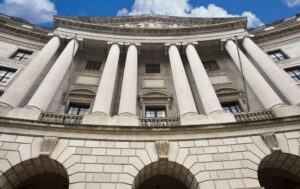
【VISTA NEWS】Mid-Atlantic Beach Water Monitoring Boosted by Federal Grants
Four Mid-Atlantic states will receive a combined $944,000 in federal grant funding to track coastal water quality and alert the public when bacteria levels pose a risk to swimmers. The funding, distributed by the U.S. Environmental Protection Agency, will support ongoing environmental monitoring programs in Delaware, Maryland, Pennsylvania and Virginia. Local officials use these resources to identify contamination and issue health advisories or beach closures. Under the distribution plan, Virginia will receive the largest share at $263,000, followed by Maryland at $258,000. Pennsylvania is slated to receive $214,000, while Delaware will receive $209,000. The grants are authorized under the Beaches Environmental Assessment and Coastal Health Act. Funding allocations are determined by specific local criteria, including the total miles of shoreline, the population density of coastal counties and the overall length of the regional beach season. To qualify for the federal program, states must maintain EPA-approved water quality standards for their coastal or Great Lakes recreational waters. Recipients are also required to meet 11 distinct performance benchmarks regarding how they monitor water, assess data and notify the public of potential hazards. Environmental officials recommend that compliance data and local beach advisories be reviewed online before visiting public swimming areas. Source: Jesse
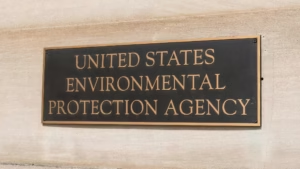
【VISTA NEWS】EPA expected to revise portions of PFAS drinking water rule
Source:WaterWorld Date:May 8, 2026 The EPA plans to revise its recent PFAS drinking water standards, including delaying deadlines and rescinding limits for less common compounds. The U.S. Environmental Protection Agency is expected to propose revisions to portions of the federal PFAS drinking water rule finalized under the Biden administration, according to reporting from the Assoicated Press. The revisions include delaying compliance deadlines and rescinding limits for several less common compounds. According to comments made by Jessica Kramer at a water conference in Washington, D.C., the agency plans to maintain the current 4 parts-per-trillion standards for PFOA and PFOS — the two most widely studied PFAS compounds — while extending the compliance deadline for utilities to 2031. The agency is also expected to rescind and reconsider limits for several other PFAS compounds, including GenX substances, as well as standards for certain PFAS mixtures. EPA officials said the changes are intended to address concerns that portions of the original rulemaking process did not fully comply with requirements under the Safe Drinking Water Act. “We need drinking water rules that are legally defensible,” Kramer said during the conference. “We need drinking water regulations that are not susceptible to legal challenge because the explicit process

【VISTA NEWS】WEF expands Water-AI Nexus advisory council with utilities, technology and water sector groups
Source:WaterWorld Date:May 7, 2026 The Water Environment Federation has expanded its Water-AI Nexus Center of Excellence Advisory Council, incorporating utilities, associations, and tech firms to foster collaboration on AI-driven water management solutions. The Water Environment Federation announced a major expansion of its Water-AI Nexus Center of Excellence Advisory Council, adding utilities, associations, engineering firms, and technology companies to strengthen collaboration around artificial intelligence and water management. The initiative, launched alongside founding partners including Amazon, Leading Utilities of the World, and Water Center at Penn, is focused on advancing both “Water for AI” and “AI for Water” strategies. New advisory council members include major industry organizations such as the Association of Metropolitan Water Agencies, Association of State Drinking Water Administrators, National Association of Clean Water Agencies, WateReuse Association, and National Rural Water Association, along with companies including Autodesk, CDM Smith, Grundfos, HDR, Raftelis and Xylem. According to WEF, the expanded council will help guide priorities for the center through technical collaboration, events, thought leadership, and awareness-building initiatives focused on sustainable and resilient water systems. “From data centers to utilities, the challenge is clear: AI must be developed in ways that respect water limits, and water systems must be equipped with smarter tools,” said